Posts

Showing posts with the label characters

Characters and Situational Awareness

Image
I was listening to National Public Radio (NPR) one day when a man began recounting an incident in his life that led to a group of teens beating him up. I didn’t listen to the complete story because I couldn’t get past the beginning. Here’s how he set it up: It was midnight.  It was Brooklyn, NY  He was walking home alone.  He was talking on the phone with his friend.  He was wearing earbuds.  He was in a deserted industrial area. There were so many things wrong with this story. Rather than think, poor guy, he got beat up. I thought what were you thinking? Of course, you got beat up. Let’s step back from his story for a moment . I worked on ten Federal Aviation Administration (FAA) handbooks–writing, editing, and proofreading chapters. One topic the FAA hit again and again was situational awareness. What is situational awareness, you ask? Pretty much what you think it is: being aware of the situation around you. Being aware of what is happening...

Population Explosion: Filling Your Story With Too Many Characters

Image
I once read a manuscript for an aspiring writer who introduced 40 characters in the first three chapters. She wasn’t happy when my critique suggested she pare down the number of characters she named. She felt my suggestion, if she followed it, would ruin the story because all these characters were part of the story. Not really. She had named and described every character as they appeared in her story. Giving a name, description, and back story to Mary Jane the cashier who appears on page  two because the protagonist is buying groceries and she’s his cashier doesn’t bequeath name status on Mary Jane. She need to be “the cashier.” Bombarding the reader with a sports arena full of named characters is no way to build a bond between the main characters of your story and the reader.  In most stories there are characters who need to be named and those who don’t. Minor characters who exist to people your story world can be identified by their job, their hair color, ...

The Ripple Effect in Storytelling

Image
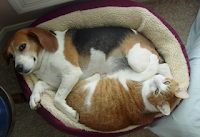
I recently watched a TV show that featured a scene with the main character and a dog. It was a very cute scene, but even though the story remained in that setting, the dog never appeared again. Basically, they brought the dog on stage, had him do his part, and then forgot about him. Well, they had him go into a kennel with no door. As if that was going to keep him there while people traipsed around his home.  As a dog owner, I was quite bothered by the fact the dog basically disappeared. Although people came and went in this house, the dog was never seen or heard again. References were made that the home owner had a dog, had even worked with a companion dog program, but the dog itself made no other appearance. The script writers forgot about the ripple effect. What’s that, you ask? Well, once something is introduced into the story, it has consequences that ripple out. Imagine a pebble tossed into a pond, it hits the water and then ever widening ripples reach out to t...